Water, steam or outdoor exposure
Start with materials designed to resist water, weathering, ozone and ageing.

Start with your main operating constraint or the required form, then compare materials and ask our technical team to confirm your selection.
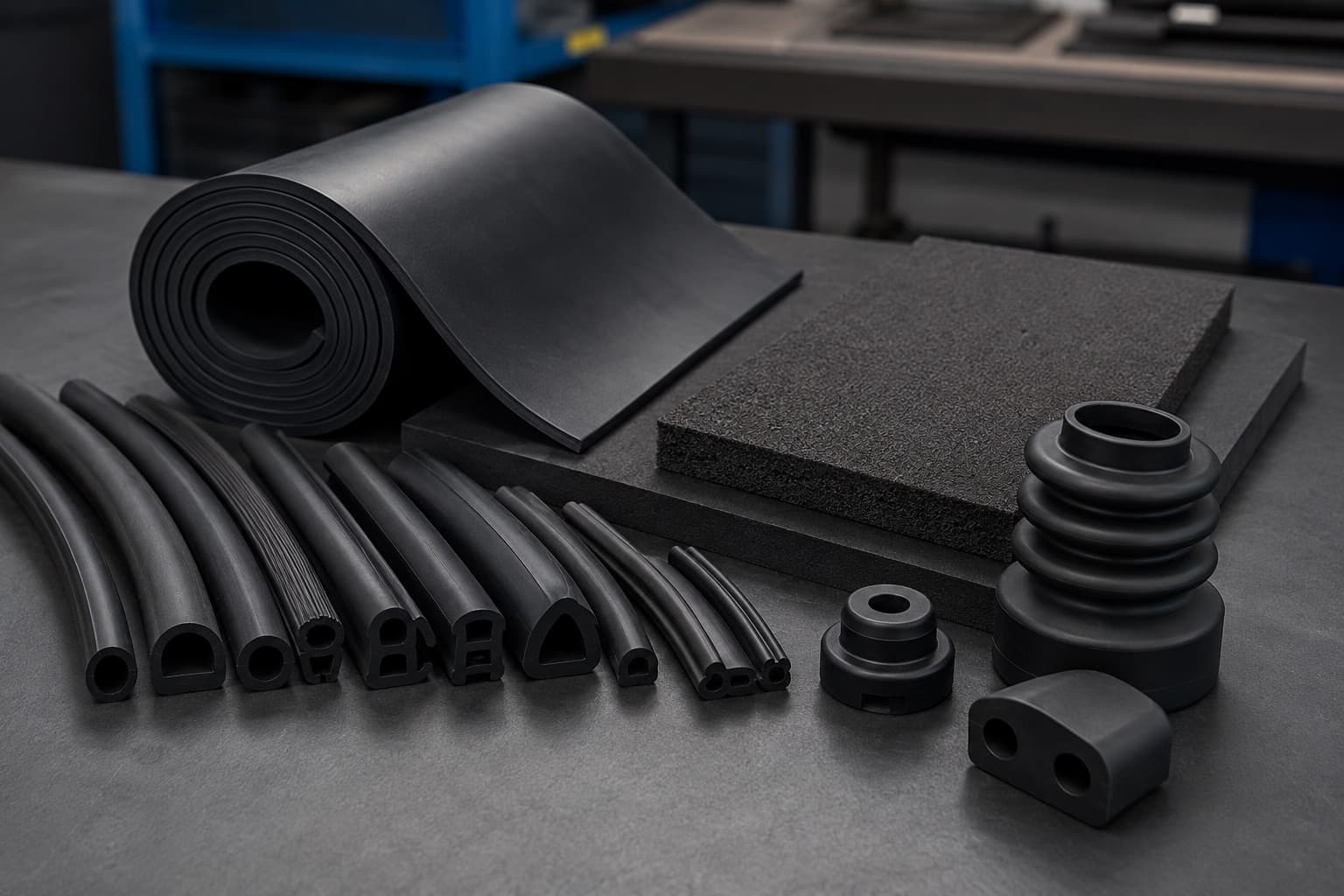
Elastomer selection starts with the medium, service temperature and mechanical loads. These four situations provide a practical starting point.
This guidance is indicative. Final compatibility also depends on concentration, pressure, exposure time and assembly conditions.
Start with materials designed to resist water, weathering, ozone and ageing.
The medium and service temperature help distinguish between compatible compounds.
Use the actual temperature range and required approvals to guide your selection.
For a general application, begin with a versatile material before refining hardness and thickness.
Tell us the medium, temperature, pressure, dimensions and quantity. A technician can confirm the material and form before manufacturing.
Go directly to cutting, moulding and extrusion solutions. The material can then be selected for your service conditions.
Sheets and rolls, with or without reinforcement, in a range of hardnesses.
Standard or custom-made parts, with the option of embedded metal components.
Extruded forms for sealing, protection and insulation.
Flexible solutions for air, water, dust, vibration, packing and spacing.
This table provides an initial comparison of common uses and continuous operating temperatures. Open each product sheet to review the other application constraints.
| Material | Often selected for | Continuous temperature | Product sheet |
|---|---|---|---|
| NR/SBRNatural rubber | General applications, cold or hot water | −30°C to +70°C | View material |
| CRNeoprene / polychloroprene | Versatile solution, outdoor exposure | −30°C to +70°C | View material |
| NBRNitrile | Oils and greases | −10°C to +70°C | View material |
| White NBRFood-grade nitrile | Applications requiring FDA compliance | −10°C to +70°C | View material |
| EPDMEthylene propylene diene | Water, steam, acids and weathering | −40°C to +120°C | View material |
| VMQSilicone | High temperatures and food applications | −60°C to +200°C | View material |
| IIRButyl | Low gas permeability, water and steam | −40°C to +100°C | View material |
| CSMHypalon | Acids and caustic soda | −35°C to +110°C | View material |
| FPMViton | Severe thermal and chemical conditions | −10°C to +250°C | View material |
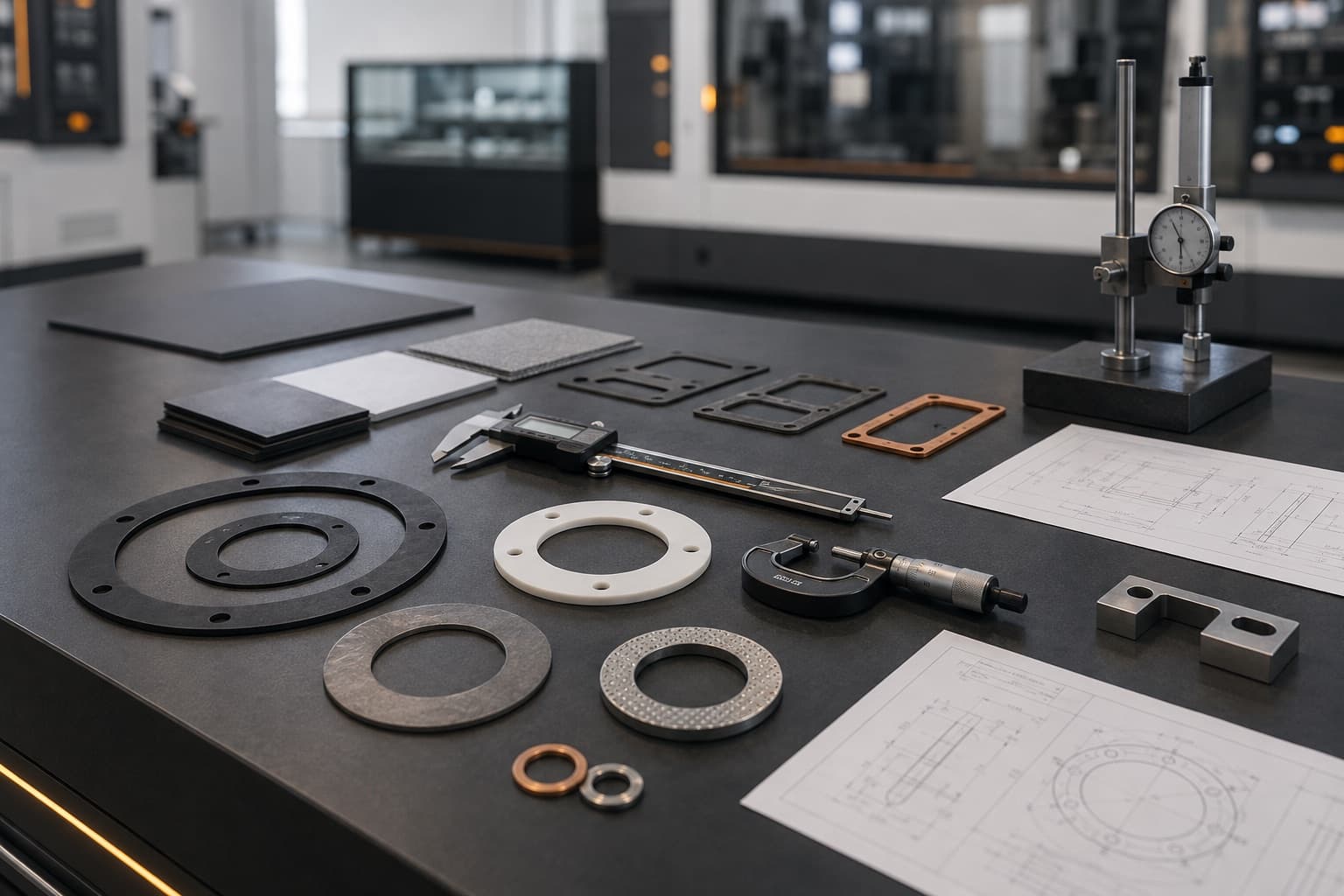
A drawing or sample allows us to review a cut, moulded or extruded part. Include the known service conditions to speed up material selection.
NBR nitrile is generally the first choice for oils and greases. When temperature or chemical exposure becomes more severe, an FPM Viton grade may be considered.
Solid rubber suits parts, sheets and gaskets that require good mechanical strength. Foam compresses more readily and is better suited to packing, insulation, cushioning and sealing against air or dust.
Yes. Parts can be cut, moulded or extruded from a drawing, sample or dimensions. The review considers material, hardness, quantity and service conditions.
Cornille’s technical team selects the material, hardness and manufacturing process from your actual operating constraints.
Request a technical review